
Your business entrance should open smoothly, close reliably, and secure the building when needed. When employees have to jiggle a key, pull a door into position, or push repeatedly on a handle, the hardware deserves attention.
Problems with commercial door hardware can disrupt daily operations, weaken security, and affect safe access. For businesses in Euless, TX, and surrounding areas, recognizing the warning signs early helps prevent a small inconvenience from becoming a lockout or a failed entrance.
Here are the commercial door hardware problems business owners should take seriously.
1. Keys That Stick or Locks That Are Difficult to Turn
A key should operate its lock without excessive force. If employees regularly struggle to turn it, the cause could be a worn key, a damaged cylinder, or pressure from a misaligned door.
Forcing the key can make the problem worse and may cause it to break inside the lock. A commercial locksmith can inspect both the key and the door hardware before recommending a solution.
Sometimes key replacement resolves the issue. In other cases, the cylinder or locking mechanism needs repair or replacement. Making another copy of a badly worn key may reproduce its problems, so an accurate replacement matters.
Rekeying services serve a different purpose: they change which key operates a compatible lock. Rekeying may be useful after a key goes missing or access needs change, but it does not fix a damaged mechanism or poor door alignment.
2. Loose Handles, Levers, or Lock Trim
A handle that wobbles, pulls away from the door, or fails to return normally can signal loose fasteners, worn internal parts, or damage around the mounting points.
High-traffic entrances place repeated stress on these components. Ignoring looseness may eventually leave employees unable to retract the latch or operate the door properly.
Have the hardware checked before it separates or stops working. A professional assessment can determine whether securing the mounting points is enough or whether replacement parts are needed.
If new lock installation is necessary, the replacement should suit the door construction, intended function, and frequency of use. Hardware that fits the opening poorly can create recurring problems even when the lock itself is new.
3. Doors That Do Not Latch Reliably
A door can appear closed while its latch has not engaged the strike. That creates an obvious concern for exterior entrances, storage rooms, and other controlled-access areas.
Warning signs include:
- Needing to lift or pull the door to lock it.
- Scraping against the frame or floor.
- A latch that catches only when the door is slammed.
- A visible gap or uneven fit around the opening.
Possible causes include hinge wear, a shifting or damaged frame, strike alignment, and malfunctioning hardware. The door, frame, hinges, and lock work together, so replacing the cylinder alone may leave the problem unresolved.
A high security lock also needs a sound door assembly. Upgrading the cylinder cannot compensate for a latch that fails to engage or a damaged mounting area.
4. Door Closers That Slam, Leak, or Fail to Close
Door closers control how a door returns after someone opens it. A closer that slams, leaks fluid, or leaves the door partly open needs assessment.
Allegion identifies incorrect adjustment, oil loss, and internal component damage as possible causes of slamming. Depending on the problem, the closer may need adjustment, repair, or replacement.
A partly open door may also result from binding hinges, a misaligned latch, or other resistance. Increasing closer force without checking the whole opening can make the door harder to use while leaving the underlying issue in place.
Ask a qualified service provider to evaluate the closer and door together. For a fire-rated opening, any repair or replacement must preserve the assembly’s required function and use suitable components.
5. Exit Hardware That Sticks or Does Not Release Properly
A panic bar or other exit device that sticks, binds, or fails to release the latch deserves prompt attention. Emergency exit operation should not depend on employees knowing a workaround.
OSHA’s workplace exit-route standard requires employees to be able to open exit-route doors from inside without needing a key, tool, or special knowledge. Faulty exit hardware can undermine that function.
Do not add improvised locks or restraints to compensate for a malfunction. Notify the building manager and arrange qualified inspection and repair. Hardware changes should be assessed against the requirements that apply to the building and opening.
Security improvements must preserve authorized entry and required exit operation. The right solution depends on the door’s purpose, rather than simply choosing a stronger lock.
6. Electronic Locks That Work Intermittently
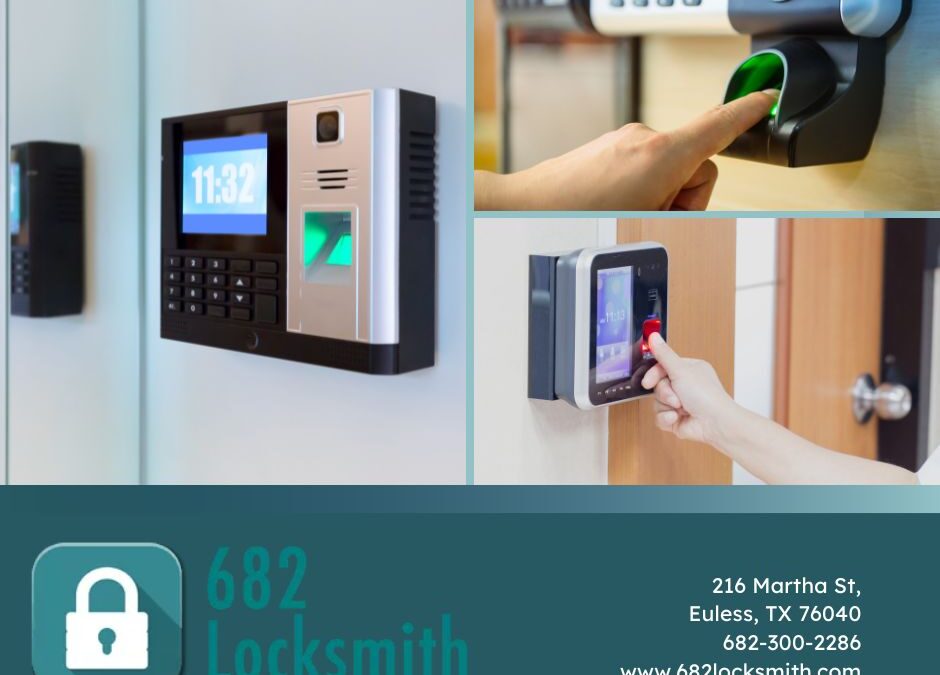
An electronic lock system that accepts credentials inconsistently can interrupt business access and make security difficult to manage. Problems may involve batteries, power supplies, readers, permissions, wiring, or mechanical alignment.
Smart locks and commercial access-control systems differ in their capabilities. Before replacing equipment, record what happens: Does the reader recognize the credential? Does the lock release? Is the issue limited to one user or one door?
Those details help a locksmith or access-control technician distinguish a hardware fault from a permissions or system problem. Avoid unnecessary resets that could erase configuration or access records.
Also review credential management. Deactivating an employee’s electronic credential does not automatically invalidate a physical backup key, and rekeying a mechanical cylinder does not revoke digital access.
7. Inconsistent Keys and Unmanaged Access
Commercial door hardware problems are not always mechanical. Unlabeled keys, missing records, and uncontrolled duplicates can make it difficult to know who can enter particular areas.
A master key system can organize access to compatible mechanical locks, allowing designated keys to operate specific doors and a master key to operate a planned group. Its usefulness depends on careful design and key control.
If a master key goes missing, the impact may extend to several doors. Discuss which locks it operates and whether rekeying or another access change is appropriate. Replacing the missing key alone does not prevent the original from working.
Arrange Commercial Door Hardware Service Before Failure
Check frequently used entrances for changes in operation, and encourage staff to report sticking locks, loose handles, slamming doors, and failed access attempts. Follow manufacturer maintenance guidance and schedule professional attention based on use and condition.
682 Locksmith lists commercial lock repair, rekeying, master key, electronic access, high-security lock, and panic bar services. Businesses in Euless, TX, and surrounding areas can contact the team to discuss the affected opening and available service options.
If your commercial door hardware is becoming difficult to use, call 682 Locksmith at 682-300-2286 or visit 682 Locksmith. Explain the symptoms and ask about coverage, availability, and an estimate for the necessary work.
Frequently Asked Questions
Can rekeying fix a sticking commercial lock?
Rekeying changes key access. A sticking lock may need a replacement key, mechanical repair, or door alignment work. The cause should be diagnosed first.
Should every faulty commercial lock be replaced?
No. Some problems can be corrected through appropriate adjustment or repair. Replacement may be needed when components are damaged, worn beyond repair, or unsuitable for the opening.
Can smart locks be installed on an existing business door?
Possibly. Compatibility depends on the door, existing hardware, power requirements, intended use, and applicable exit requirements. A professional assessment helps determine suitable options.
What should I do if a panic bar does not operate reliably?
Notify the building manager promptly and arrange qualified service. Do not rely on a workaround or add hardware that could obstruct required exit operation.
Looking for fast, reliable locksmith services in the area? Look no further than 682 Locksmith. Whether you’re locked out, need key replacements, or require enhanced security solutions for your home or business, our experienced team is ready to help. We also offer 24/7 Emergency lockout assistance. Visit us at 216 Martha St, Euless, TX 76040, or call us at 682-300-2286.
Recent Comments